Every building has a quality tier: basic, standard, or premium. Higher quality means higher rent.
Neighborhood quality matters. The sim scores every residential building on four things: disagreement aura from nearby buildings, crime rate, park access, and walkable services like schools, shops, hospitals and police stations. Bad neighborhoods push rent down. Good ones push it up. This is based on hedonic pricing theory from urban economics.
Commercial rent now varies by industry. Finance and professional services pay more because they have higher margins. Food service and hospitality pay less. This affects where companies want to set up shop.
Landlords pass part of the property tax to tenants. About 70% of the tax ends up in asking rent. So raising the land value tax actually raises the cost of living. This is a well-documented effect in real housing markets.
Households and companies now have leases. When you move into a building your rent is locked in at whatever the asking rent is that month. The building’s asking rent can keep changing but your lease stays the same until you move out. This means longtime tenants can pay less than newcomers in the same building.
The sim now tracks how people move. Moves are tagged as forced (eviction or demolition), responsive (moved because of rent burden or bad neighborhood), or voluntary (upgraded by choice).
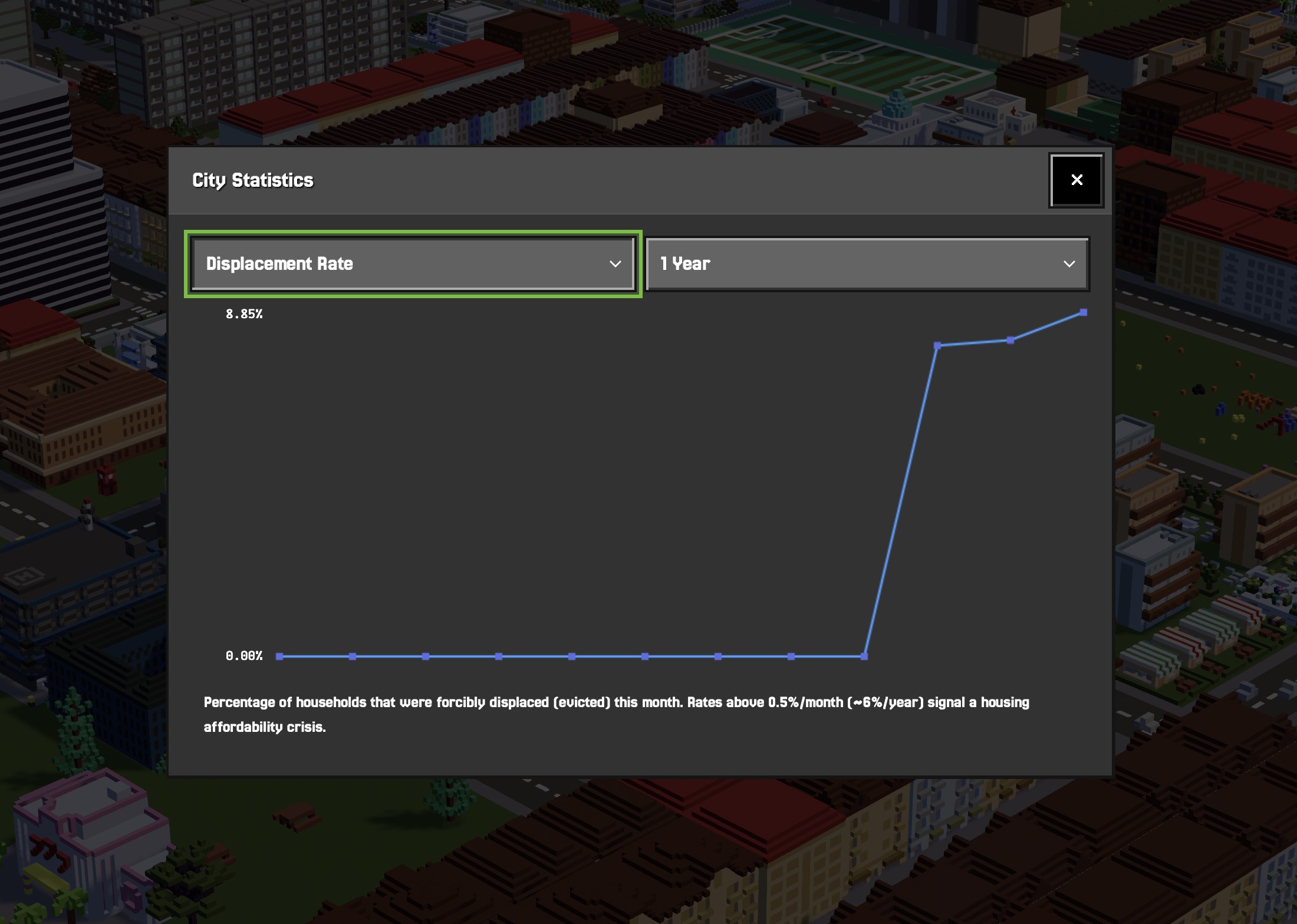
Two new stats in the stats panel. Monthly GDP uses the income approach: total wages plus corporate profits plus rent income. Displacement rate shows the percentage of households that were forcibly displaced that month. Rates above 0.5% per month signal a housing affordability crisis.
Fixed a bug where bulldozing an area of roads could also delete neighboring buildings.
Upgraded to a modern version of the Chromium engine, this should solve game crashes in specific Windows/Graphics driver combinations, and make overall the game more reliable.