Version 1.6.11
Households
Families share a home, split rent, and make decisions together.
- Families move as one: When a household relocates or gets evicted, everyone moves together
- Rent is shared: Working-age adults in a household split the rent equally
- Young adults grow up gradually Adult children no longer instantly leave home. They stay with their parents until they land a job and save up enough for rent
- Homeless citizens try family first: When someone loses their home, they’ll try to move in with a parent’s household
- Families form naturally: When two parents have a child together, their households merge
- Immigrants arrive as families: New citizens moving to your city now arrive in family groups
- Unit-based occupancy: Buildings are now tracked by apartment units, not raw headcount. A 12-unit apartment building shows “7/12 units rented (58%)” rather than “42/60 residents.” This affects vacancy rates, rent adjustments, and demand calculations
Socioeconomic Classification
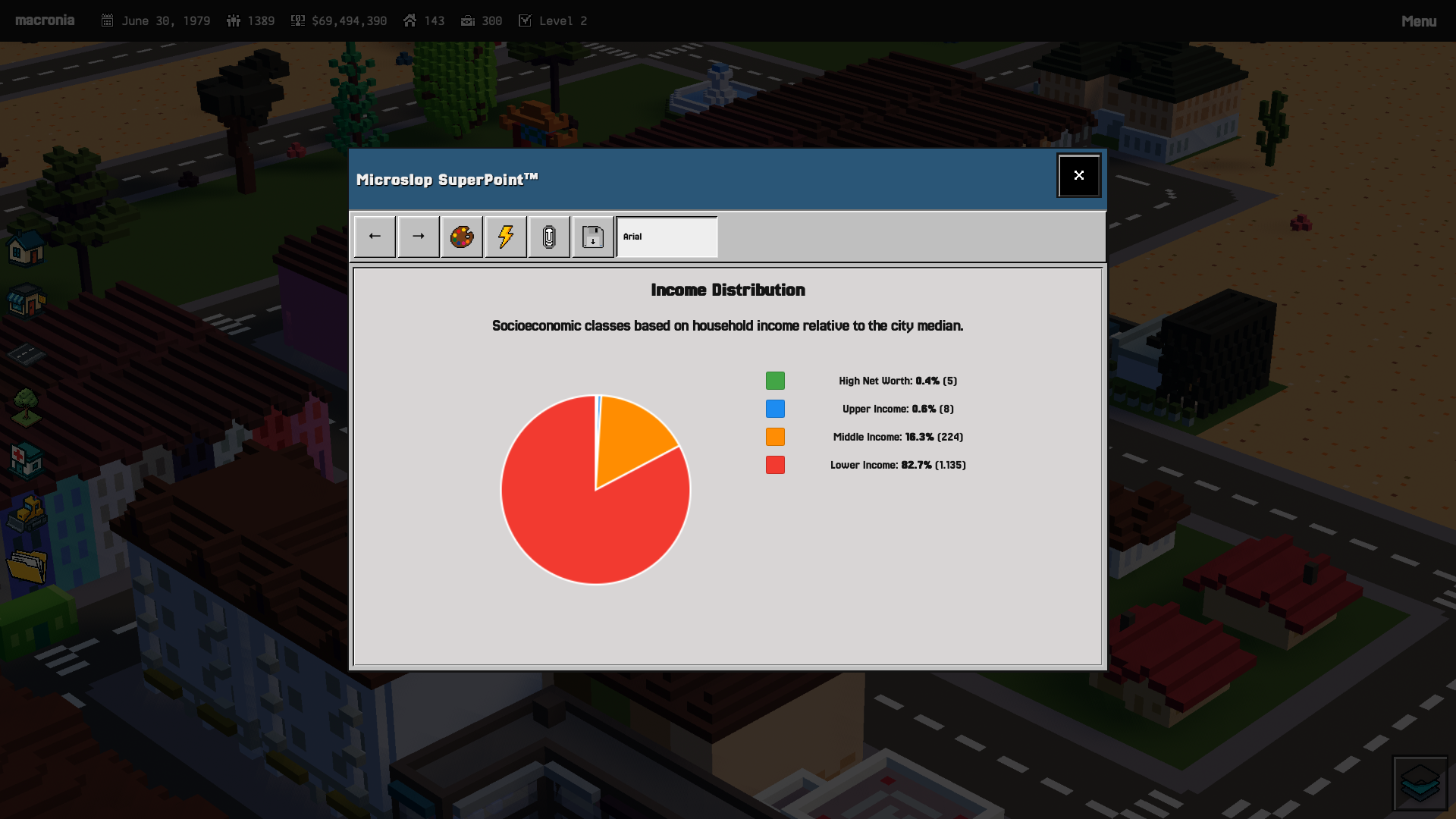
We revamped how the game classifies households into socioeconomic tiers, based on how the Pew Research Center classifies in real life.
- Households are mainly classified by how much they earn from their jobs
- Income is compared to the city’s median: 2x the median means upper income, less than 2/3 means lower income, everyone else is middle income
- High net worth is still wealth-based (over $1M) as a separate overlay on top
- We went from 5 tiers to 4 by merging working class and low income into one “lower income” group
- Upper income households now leave the city if they can’t find a home away from disapproval buildings, just like high net worth ones already did